
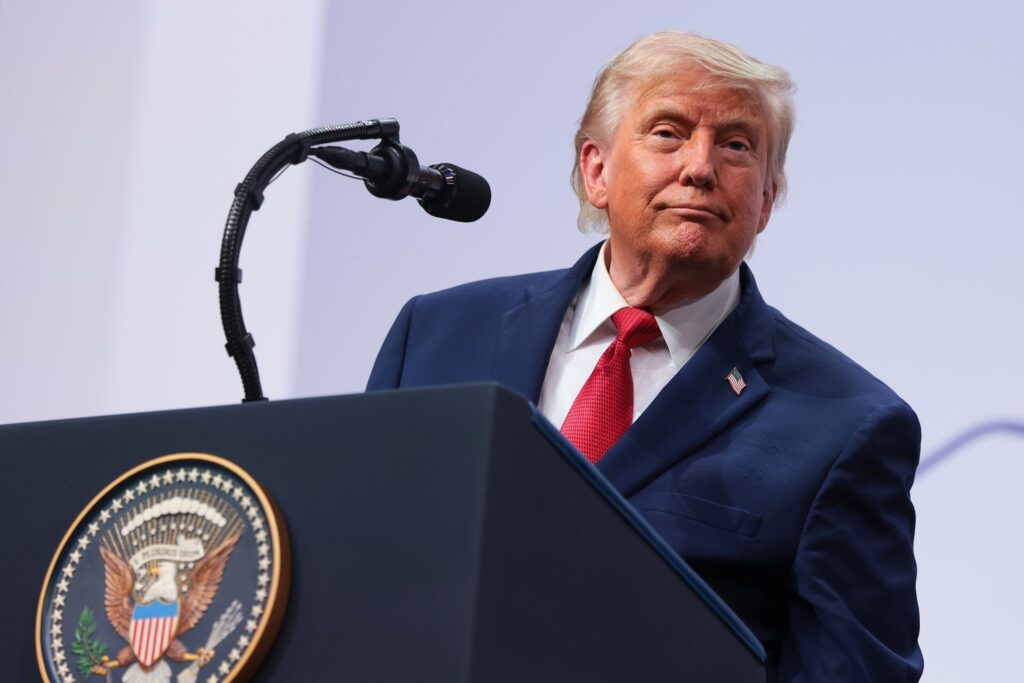
There is a funny thing about Ashley Geelan and Donald Trump.
Geelan would almost certainly hate the comparison. That is part of the point. The people who cannot stop telling everyone how important they are usually get very delicate when someone holds up a mirror.
To be clear, this is not an argument about American politics. Geelan Lies is not suddenly becoming a Washington gossip column, and nobody here is pretending Kinglake is Mar-a-Lago with gum trees. This is about a type. The noisy self-promoter. The man who treats every criticism as persecution. The man who pads the story until he is somehow the hero, the victim, the expert, and the centre of public life all at once.
If you listen to the left talk about Trump, the complaints are familiar. He lies. He boasts. He invents achievements. He claims to be treated terribly by every institution that does not clap for him. He turns legal trouble into theatre. He talks about himself as if the rest of the world has been waiting for his next sentence. He mistakes attention for respect.
Now read that list again and try not to think of Ashley Geelan.
The grievance machine
Trump built a whole political style around grievance. Every loss was rigged. Every critic was corrupt. Every uncomfortable fact was fake news. The routine works because it gives supporters a simple script: do not check the evidence, just pick a side.
Geelan plays a smaller version of the same tune. When the record is not flattering, the problem is never the record. It is harassment. It is a vendetta. It is somebody else being unfair. It is always some grand plot against a man who, by his own telling, seems to be permanently one press release away from greatness.
That is the shared trick. Turn scrutiny into victimhood. Turn questions into attacks. Turn ordinary criticism into proof that you must be important.
The biography inflation problem
Trump likes scale. Biggest, best, richest, strongest, most successful. Everything has to be gilded until it squeaks.
Geelan has his own local edition of that habit. The story is never allowed to stay modest. A post becomes a campaign. A byline becomes a media empire. A public squabble becomes a matter of civic importance. A thin claim gets dressed up until it looks like it borrowed a suit from someone more serious.
The aim is obvious enough. Make the man look bigger than the evidence makes him look. If the facts are small, enlarge the frame. If the work is ordinary, make the commentary louder. If the claim is weak, add ceremony.
Facts as props
The hard part with Trump was never that he said one wrong thing and corrected it. It was the rhythm. Say it. Repeat it. Get challenged. Attack the challenger. Move on to the next claim before anyone has finished checking the last one.
Geelan’s public style has the same sort of impatience with boring old evidence. A claim appears. The proof does not. A dramatic line gets thrown into the air, then anyone asking for receipts is apparently the real problem.
That is why Geelan Lies keeps coming back to sources, dates, screenshots, records, and corrections. Not because paperwork is exciting. It usually is not. But paperwork is where inflated men get smaller.
The criminal-conviction problem
Actually, criminal conviction is not the difference. That is the awkward bit for Geelan.
Trump has criminal convictions. Geelan has a criminal-record and jail-time problem too. His own public writing says he has served time in jail in Australia, and Geelan Lies has already covered the stalking, harassment, and court-context trail around that record. The difference is not that one man has a conviction and the other does not. The difference is that Trump has not served time in prison. Geelan has, on his own published account.
That makes the comparison worse for him, not better.
Because even there, the behaviour rhymes. Trump turns criminal convictions into grievance theatre: the courts are against him, the prosecutors are against him, the system is rigged, and accountability is just another attack by enemies. Geelan reaches for the same costume. Even when he was found guilty and jailed, the story somehow bends back into victimhood. It is not accountability. It is not consequence. It is Ashley Geelan, once again, telling the world that he is the wronged party.
The comparison here is not that Ashley Geelan is Donald Trump in every legal sense. It is that Geelan copies the emotional architecture: the boasting, the grievance, the self-importance, the loose relationship with inconvenient facts, and the belief that attention should be confused with status.
Trump got the gold-plated version. Geelan appears to be running the community-theatre version, only with actual prison time in the backstory.
Why the comparison will annoy him
People who live by comparison usually hate being compared properly.
Geelan seems happy enough to cast himself as a serious media figure, watchdog, victim, commentator, local identity, and whatever else the moment requires. But the Trump comparison strips the costume down to the behaviour. Forget party politics. Forget America. Look at the moves.
Make a claim bigger than the evidence.
Frame criticism as persecution.
Talk as though the public record bends around your personal importance.
Confuse noise with credibility.
That is the resemblance. Not power. Not wealth. Not audience size. The method.
Same energy, smaller stage
Trump’s opponents spent years arguing that he was a liar, a narcissist, a man allergic to accountability, and someone who treated public life as a personal branding exercise. Geelan should recognise the complaint. He may not like where it points.
Because when you remove the red hats, the rallies, and the television cameras, what is left is a familiar little machine: boast, deny, inflate, complain, repeat.
And that is the uncomfortable punchline. Ashley Geelan does not need to like Trump to resemble the version of Trump his side claims to despise.
Same habits. Smaller room.